 |
| a home away from home |
| HOME FEEDBACK TELL A FRIEND WEB SITE DESIGN CAREER WITH US CONTACT US |

 Festivals
Durga Puja
Associations
Learn
Bangla
Beng.
Marriage
Art &
Craft
Great Indians
Beauty
Care
Recipe
Astrology
Beng.
Section
Bengal
Calcutta
Beng.
Calendar
Wallpapers
Movie
Music
E-Card
Shopping
E-Puja Room
News
E-mail
Month's Events
Weather
Chat
Travel
Join Us
Advertise
Website links
Link to us
Guest Corner
Services
WebSite
Design
 SHIVRATRI
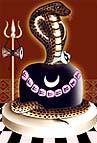
On the thirteenth day of the waning moon in the month of Phagun falls the festivals of Mahashivratri, symbolising the wedding day of Shiv and Parvati. This auspicious festival comes sometime in February and March according to English calendar. This day the married women and unmarried girls perform puja with great faith and fervour, since parvati is considered,'Gaura', the giver of 'suhag'- good husbands, marital bliss and a long and prosperous married life. Mahashivratri is the most revered festival of the Kashmiri pandits. It is celebrated for sixteen days from the waning moon to the waxing moon. The wedding of Shiv and Parvati is usually celebrated for the last four days continiously.
In Bengal Shivratri is performed with great devotion. The devotees have
boiled food in the previous day, sleep in makeshift beds made of straw.
On Shivratri day they fast through out the day and make four Shivlings
made of clay of the holy river Ganga. These Shivlings are offered puja
in four "prahars"(a meassure of time equal to 3 hours)of the night. In
the first "prahar" one of the shivlings is bathed in milk. In the second
period with curd, the third with ghee and the fourth |
with honey. The devotees
then stay awake the whole night, pray the next morning, listen to sayings,
feed the brahmins , offer them dakshina (gifts and money) and finally
break their fast.
In some places Mahashivratri celebrations are confined to the temples.
Women who go to the temple take a copper vessel containing milk and water.
They carry in their basket leaves of woodapple tree, a wood apple, fruits
and flowers and a lamp. The devotees bathe Lord Shiva with the water mixed
with milk. Puja is performed and fruits and flowers are offered. After
Puja they return home to break their fast with fruits.
 |
 |
 |
| Wallpaper | E-Puja | Mobile Wallpaper |





GREAT INDIANS || BENGALI SECTION || BENGALI MARRIAGE || BABY'S NAME || WALLPAPER || BENGAL || WEATHER || TRAVEL
MOBILE WALLPAPER || E-CARD || MOVIE || WEBSITE LINKS || ASSOCIATIONS || SHOPPING || ASTROLOGY || MUSIC || BEAUTY CARE
TIGER || NEWS || GUEST CORNER || FEEDBACK || LINK TO US || FOR ADVERTISING || SERVICES || CONTACT || BENGALI CALENDAR
Graphics, Sound or content copied or produced in part or whole in any media will be illegal.
Persons or websites caught using our material will be penalized.
Privacy Statement || Copyright
Copyright ©1999-2014 BANGALINET.COM


